
English| EUR
Suggested for you
More currencies
Choose a language
Europe's largest ice cap covers roughly eight percent of Iceland, and the walking surface changes shape every week of the melt season. Ratings here describe two different things at once: the muscle a route asks of you, and the risk the ice presents on the day. This guide separates the two so you can judge which grade fits your body.
Quick answer
Most guided walks on the ice cap's outlet tongues are graded easy to moderate: 1.5 to 3 hours on the ice, low elevation gain, and no prior mountaineering experience. Crampons and a harness make the effort feel harder than the distance suggests. Steeper ice-fall routes and multi-hour crossings jump to strenuous. Entry to Vatnajökull National Park itself is free, 0 ISK.
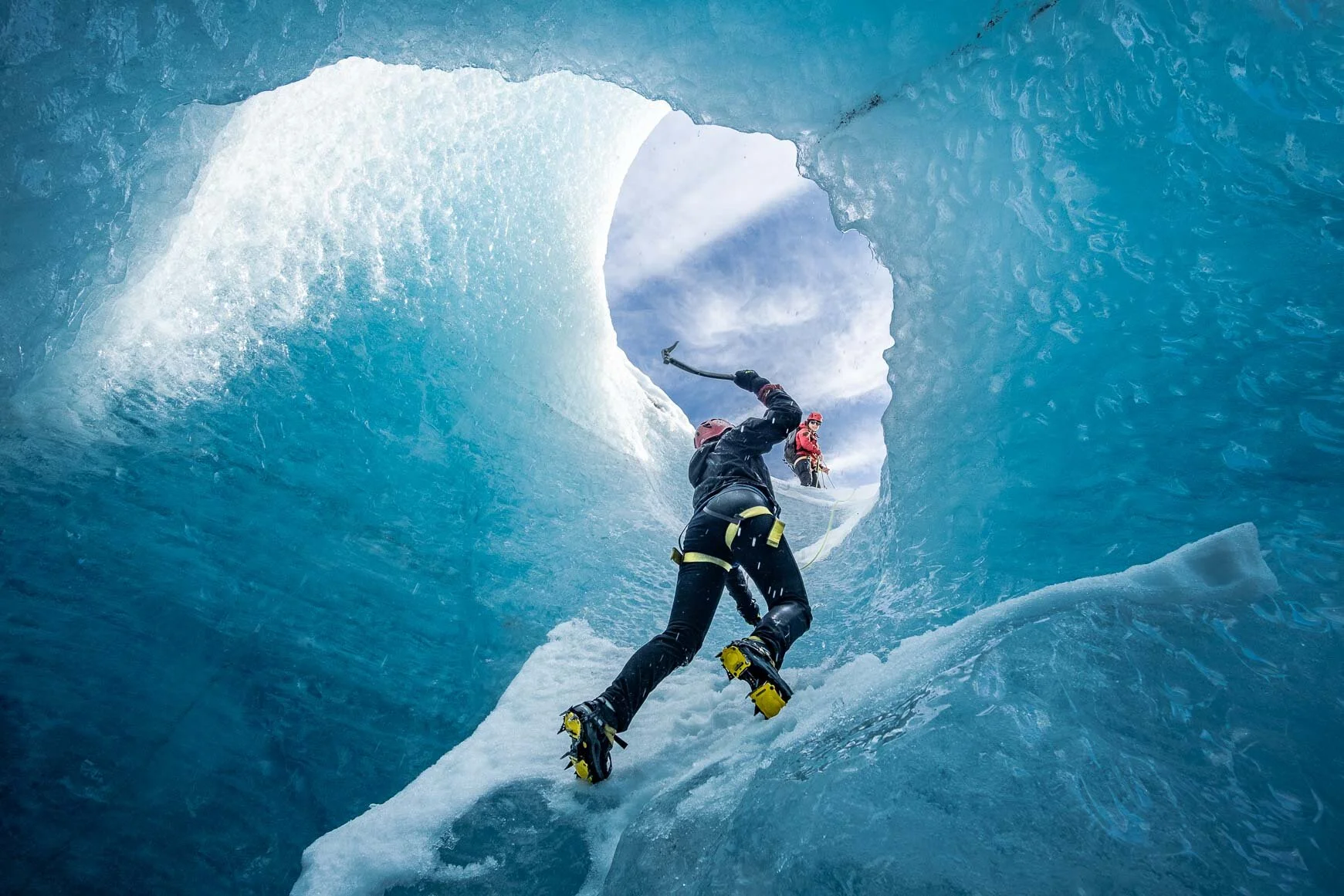
Vatnajökull is not one static surface. The ice cap holds about 3,000 cubic kilometres of ice, and the outlet glaciers that hikers actually walk on — Falljökull, Svínafellsjökull, Virkisjökull, Breiðamerkurjökull — creep downhill at their own speeds, cracking open new crevasses and sealing others within a single season. This is the first thing that shapes vatnajökull glacier hike difficulty: the route walked in June is rarely the route walked in September, because guides re-scout the ice and re-flag the safe line as the surface shifts. A grade printed on a website is therefore a description of a typical day, not a promise about the day you turn up. The physical demand divides cleanly into three layers. The first is the approach — a moraine walk of loose grey rubble, meltwater channels and sometimes a short scramble, taken in stiff boots before anyone touches the ice. The second is walking in crampons, which forces a wider, flat-footed gait and a deliberate stamp on each step; calves and hip flexors feel this within twenty minutes, and it is the single most common reason a fit hiker describes the outing as harder than expected. The third layer is exposure: wind funnelling off the ice cap, glare from the white surface, and rain that arrives without much warning even in the middle of a Nordic summer. None of these layers require athleticism, but together they demand steadiness on uneven ground and the ability to keep moving for a few hours without a proper seat. Route grading across Vatnajökull National Park generally runs from a short introductory ice walk to a full day on the glacier tongue, with technical ice climbing and blue-ice cave routes sitting above both. A jöklaganga — the Icelandic term for a glacier walk — is legally and practically a guided activity here; independent travel on the ice without ropes, training and crevasse-rescue equipment is how most glacier accidents in Iceland happen. Understanding vatnajökull glacier hike difficulty means accepting that the guide's judgement, not the walker's ambition, sets the turnaround point. Operators supply crampons, ice axe and harness, and they will decline a booking if boot stiffness or mobility does not meet their threshold. What to do with this information is straightforward. Match the grade to honest self-assessment rather than to the photograph that prompted the trip, and book the shorter tongue walk if the answer is uncertain — the ice looks identical at hour one and hour four. Arrive between 09:00 and 16:00, when the visitor centres are staffed and conditions reports for the Skaftafell and Jökulsárlón approaches are current; that window matters more than an early start. Park rangers and glacier guides both update route status daily, and their assessment supersedes anything read in advance. Weather on the south coast changes fast enough that a moderate route can close and reopen inside the same afternoon. Anyone comparing Vatnajökull glacier tours should read the stated grade alongside the operator's minimum age, group size and turnaround policy, because those three figures reveal more about the real demand of the outing than the word 'moderate' ever will on its own.
“The route walked in June is rarely the route walked in September — the ice rewrites its own grade.”
This procedure takes you from choosing a guided glacier route to standing roped up on the ice at Vatnajökull, where independent access to the glacier is not permitted and every hike runs with a certified guide. Allow four to six weeks of lead time for arranging a guided departure, plus roughly half a day on site for check-in, gear fitting, the approach walk and the hike itself.
Compare guided route options by walking distance, total ascent and time on ice, then pick the one you can sustain for its full duration. The common mistake is judging difficulty by distance alone — crampon walking on uneven ice is significantly slower and more tiring than the same distance on a trail.
Arrange your guided hike in advance through the site's booking pages rather than turning up at the glacier edge expecting to join. Walk-up availability at outlet glaciers such as Skaftafell and Breiðamerkurjökull is unreliable in high season, and unguided glacier travel is prohibited.
Bring a waterproof shell jacket and trousers, warm mid-layers, gloves, a hat and sturdy ankle-supporting boots that take a crampon binding. People routinely underestimate the wind on open ice and arrive in soft trainers, which cannot be fitted with crampons and will end the hike before it starts.
Technical hardware — crampons, harness, ice axe and helmet — is normally issued at the meeting point, so check your booking confirmation for the exact list. Assuming boots are included is the frequent error, as many operators rent them separately and only in limited sizes.
Contact the national park on +354 556 6800 or check https://www.vatnajokulsthjodgardur.is for road and access status before you set out. Conditions on the approach roads change independently of your hike, and operators cannot always relay this.
Reach the visitor centre inside the 09:00–16:00 arrival window so staff are on hand for trail and access information, and factor in the drive from your accommodation. Travellers regularly plan around the guided departure time and forget the parking and check-in walk on top of it.
At the ice edge your guide will fit crampons and demonstrate the flat-footed, wider-than-normal walking stance. Practise it on the first flat stretch — most slips happen when people revert to a narrow gait and catch the points on their own trouser leg.
Follow the guide's line exactly, keeping spacing consistent and stepping where the person ahead stepped. Wandering off the marked route to photograph a crevasse or moulin is the single most common reason a group has to stop and regroup.
Glacier hiking on Vatnajökull demands a baseline of stamina and a specific kit, so work through these steps in order from the weeks beforehand to the moment you step onto the ice.
On Vatnajökull, etiquette and safety protocol are the same thing: crevasse fields, moulins and shifting ice mean one person's shortcut becomes the whole rope team's emergency. Conduct on the ice is governed by guide instruction, not personal judgement.
The safest window for glacier hiking is during the summer months from June to August, when extended daylight and milder temperatures reduce navigational challenges. Arriving during the best arrival window of 09:00–16:00 ensures you have sufficient light and access to necessary trail information from visitor centers.
Mild temperatures, 5–12°C. Extended daylight provides the most stable conditions for glacier traversing.
Cooler, 2–7°C, increasing precipitation. Shorter days require precise timing to complete hikes before sunset.
Cold, -5 to 2°C, high wind. Severe winter conditions significantly increase hike difficulty and require specialized equipment.
—
Verdict: The best time for a glacier hike is June to August, arriving between 09:00 and 16:00 to utilize maximum daylight and visitor center support.
Vatnajökull National Park remains accessible daily to facilitate glacier hike planning and visitor support.
Vatnajökull National Park does not charge an entrance fee for visitors. Please note that independent hiking services and guided glacier tours carry their own service costs.
Verdict: The national park itself is free to enter, though visitors often pay separate fees for professional glacier guide services and required parking at sites like Skaftafell.
Everything you need to know about vatnajökull glacier hike difficulty
Most guided tours classify the vatnajökull glacier hike difficulty as easy to moderate, depending on the specific route and current ice conditions. These outings are designed for visitors with a standard level of physical fitness who are comfortable walking on uneven terrain.
You do not need to be an expert to handle vatnajökull glacier hike difficulty requirements on introductory paths. Guides provide necessary instruction on how to use technical equipment like crampons and ice axes before stepping onto the ice.
While age limits vary by operator for safety reasons, some trails are accessible for older children if they meet the physical demands of the glacier trek. Always consult with tour providers to ensure the chosen route matches your family's ability level.
Proper preparation for a Vatnajökull ice walk includes wearing waterproof hiking boots, layered thermal clothing, and packing a small backpack with water and snacks. Following the guidance of professionals is essential to navigate the changing surface safely.
Specific gear like crampons, helmets, and ice axes are standard requirements provided by guides to ensure safety on the frozen landscape. These tools help manage the vatnajökull glacier hike difficulty by providing necessary traction on ice and snow.
The best arrival window to visit the national park and inquire about conditions is 09:00–16:00. This timeframe ensures you have access to visitor centers for safety briefings and trail status updates.
A common mistake is underestimating the changing weather conditions and the physical exertion required for glacier exploration. Hikers should remain aware of their own limits and strictly follow the path marked by certified professionals.